
Why MAX_CONVERSIONS isn't always the right ASA strategy
Apple's MAX_CONVERSIONS bidding works well for high-volume campaigns. But for sparse keywords, it often overbids early and underbids late. Here's why.
Apr 28, 2025
Apple's MAX_CONVERSIONS automated bidding strategy sounds appealing: let the algorithm optimise toward conversions and get out of the way. For accounts with high conversion volume, it works well. But we see it misfire badly in a specific scenario that affects most mid-market ASA operators.
The Sparse Keyword Problem
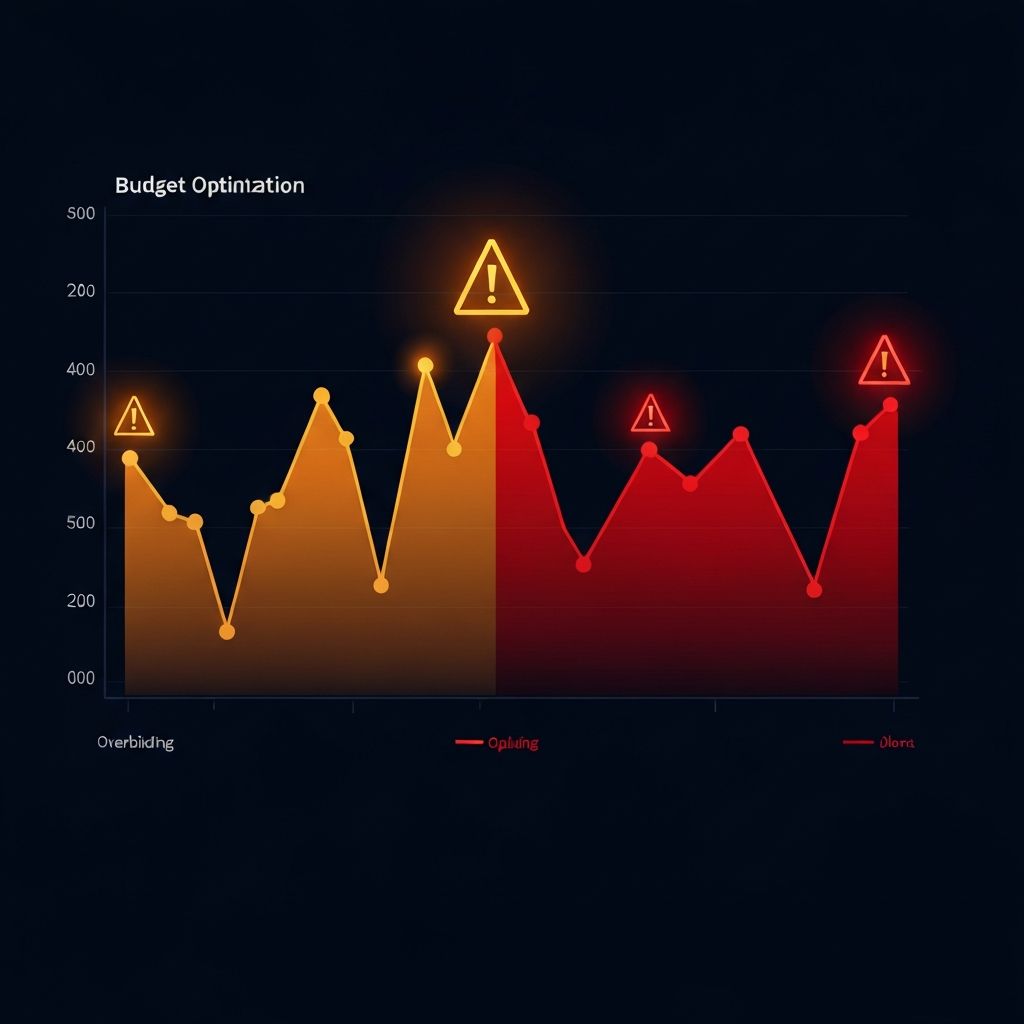
MAX_CONVERSIONS needs conversion signal to work. Apple's internal model requires a warm-up period — typically 30–50 conversions — before it can bid intelligently. During this warm-up, the algorithm often overbids to generate data quickly.
For campaigns with 10–20 converting keywords and dozens of discovery terms, you're essentially paying for the algorithm's education on every new keyword you add.
What We See in Practice
In accounts we've analysed, MAX_CONVERSIONS over-spends by 18–35% during keyword warm-up phases compared to manual CPT bidding informed by Bayesian priors. Once keywords mature past ~50 conversions, the gap closes.
Our Recommendation
Use MAX_CONVERSIONS only for campaigns where every keyword has 50+ historical conversions. For everything else — new keywords, new markets, seasonal pushes — use manual CPT with a principled bidding model.
Keenbid's approach: we use MAX_CONVERSIONS as a benchmark to measure against, not as a primary strategy for sparse accounts.

Put this into practice with Keenbid
Keenbid automates everything described in this article — Bayesian bid models, intent classification, safety guardrails, and multi-market intelligence — in one platform.
30-day free trial. No credit card required.